by Jeanne Zepp
People often use the terms automation and artificial intelligence interchangeably. Both seem to perform similar actions: speed up work, reduce human effort, and improve output consistency. Yet the two concepts couldn’t be more different.
Understanding where automation ends and AI begins isn’t just a nice-to-know concept. Organizations making decisions about technology investments, staffing, and longterm strategies for digital transformation must understand the differences today.
What Is Automation?
Automation is the use of technology to perform tasks based on predefined rules. A system does exactly what it’s programmed to do — no more, no less. It adheres to instructions, repeating the same steps quickly, accurately, and consistently every time.
Examples of automation include:
- The welcome email sent by a marketing platform whenever someone signs up.
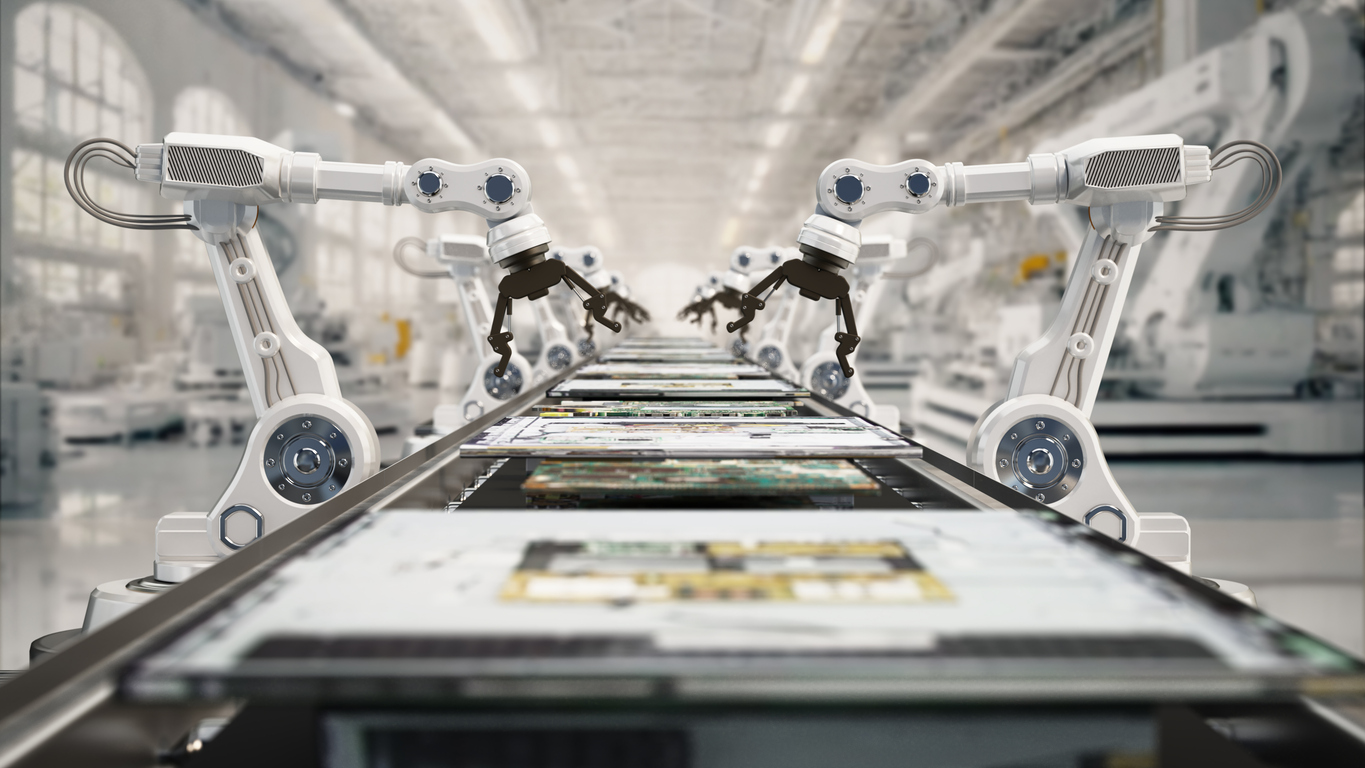
- The robots that assemble parts on a production line.
- The HR software that sends new hires the onboarding tasks they must complete.
Automation excels at repetitive, structured tasks that involve reliability and precision. It eliminates manual work, reduces human error, and frees people to focus on higher-value activities.
Automation does not learn, adapt, or make decisions beyond its coded parameters. It is powerful, but reliable and predictable.
Automation excels at repetitive, structured tasks that involve reliability and precision.
What Is Artificial Intelligence?
Artificial intelligence (AI) involves technology designed to simulate human intelligence. It can analyze data, identify patterns, make predictions, learn from experience, and adjust its behavior based on new information.
Examples include:
- Chatbots that understand natural language.
- Fraud detection systems that flag unusual behavior.
- Generative AI tools that draft documents, create images, or summarize content.
Unlike automation, AI easily handles ambiguity. It doesn’t employ an exact “if, then” rule for every scenario; AI infers, evaluates probabilities, and adapts. It excels at situations that are unstructured, variable, or complex.
AI easily handles ambiguity.
Where Automation Ends and AI Begins
Automation does things faster, while AI does things smarter. For example, humans create workflows for automation to follow, thereby reducing workloads. AI, however, evaluates these workflows, identifies efficiencies, and designs improved versions.
Here’s a way to think about the two: automation is the train traveling between fixed stations on an immovable track; AI is the self-driving car that selects the optimal route to any destination desired, considering traffic and other conditions.
How Automation and AI Can Complement Each Other
While each in its own right can be remarkable, the automation-AI combination is exceptionally powerful.
Automation is the train traveling between fixed stations on an immovable track. AI is the self-driving car that selects the optimal route to any destination desired.
Consider these three illustrations:
- Intelligent Process Automation (IPA): Automation enables a system to route invoices at a high level, but adding AI reduces human errors in data entry and coding; accelerates payments; isolates suspicious charges for review; creates comprehensive audit trails; and much more.
- Customer Service Workflows: Automation gives chatbots the capacity to deliver preset answers, but AI elevates chatbot capabilities to interpret and respond to questions and learn from each interaction.
- Content Creation and Office Productivity: Tasks like drafting emails, summarizing reports, or organizing data combine automation’s structure with AI’s language and reasoning abilities.
Simply put, the future isn’t automation versus AI. It’s automation plus AI.
Impact on the Workforce
The pessimists among us fear job loss from automation and AI. The optimists see new jobs being created, freedom from rote tasks, greater productivity, and higher-level job responsibilities.
Simply put, the future isn’t automation versus AI. It’s automation plus AI.
Automation and AI most frequently replace elements of a job rather than eliminate the entire job. The combination augments human decision-making and opens the door to creativity and strategic thinking. It’s even creating new job roles: AI trainers, data ethicists, quality specialists, prompt engineers, and more.
Organizations that thrive tomorrow won’t necessarily be the ones that automate the most. They’ll be the ones that integrate automation and AI thoughtfully, while ensuring their staff is ready to use these tools.
Choosing the Right Solution
The “if … then” statement assists when determining whether to use automation, AI, or a combination of both:
- If the task is repetitive or rule-based, then use automation.
- If the task is variable, interpretive, or data-dependent, then select AI.
- If the task is part of a larger workflow needing both consistency and intelligence, then use the two in combination.
Conclusion
There’s no doubt that automation and artificial intelligence are reshaping the way we work. However, each brings different capabilities to the workplace. Automation offers consistency and efficiency; AI delivers adaptability and insight. Successful organizations will be the ones that use these technologies in tandem to amplify human potential and power the next wave of innovation.